
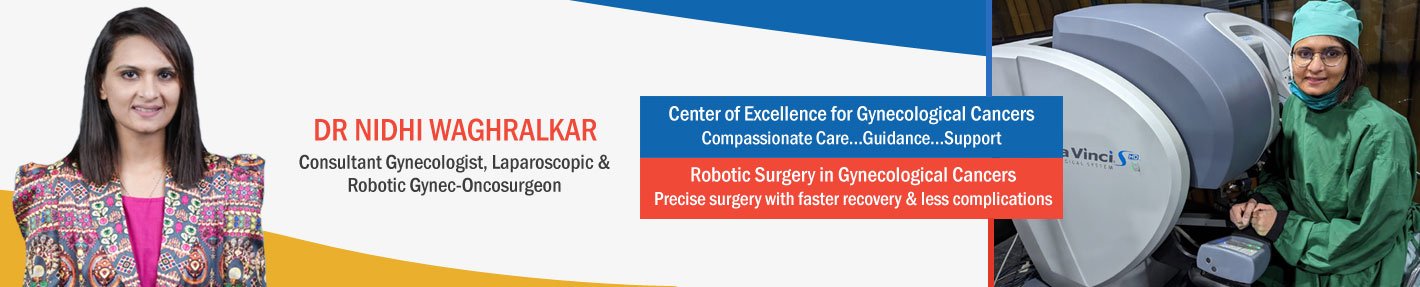
Robotic surgery or Robot assisted surgery is advanced form of minimal invasive surgery. It has transformed the field of surgical treatment specifically in cancer surgeries. We will try to answer most common frequently asked question related to robotic surgery.
Is robot assisted or robotic surgery safe?
Yes, it is safe. Because, robotic surgery does not mean that robot is performing the surgery. Robot is not independent machine which do surgery but it replicates the surgeon hand movements inside the patient tummy. There are three part of surgical robotic system. 1. Surgeon Console, 2. Robotic Arm, 3. Vision Cart Surgeon sits at console and control the robotic arm with joystick. For additional information to see how surgical robot works.
How dose robot work in surgery?
There are three part of surgical robotic system. 1. Surgeon Console, 2. Robotic Arm, 3. Vision Cart. Surgeon sits at console and control the robotic arm with joystick. Assistant surgeon sits near patient to assist the surgery by looking to the display in vision cart.
What are the benefits of robotic surgery?
Robotic surgery can be used in gynaecologic cancers like uterus cancer, cervical cancer, ovarian tumor and vulvar cancer. Benefit includes faster recovery, shorter hospital stay, less complication, minimal postoperative pain, small scar after surgery, precision in surgery and less blood loss.
How many days hospital admission required after robotic surgery?
Traditional open surgery has big incision over tummy. Contrary to this, robotic surgery has only four or five small incisions of 8 mm. Hence, pain is minimal and recovery is faster. Majority patients need only one day hospital stay after robotic or robot assisted surgery.
Why is there less complication with robotic surgery?
Robot has camera which has 10 times more magnification and provide three dimensional views. This technology helps in doing surgery with precision that has minimal blood loss, minimal chance of wound infection and less complication.
What is Sentinel node? Is it possible to find sentinel node in robotic surgery?
Sentinel node is the first node that drains cancer cells from the primary cancer site. Sentinel lymph node mapping technique identifies the sentinel node in uterus / uterine / endometrial cancer. It can be identified by robot assisted or robotic surgery. Robot has camera with near-infrared technology that enables the surgeon to find sentinel node. This video demonstrates sentinel lymph node mapping technique. By removing the sentinel node, we can identify the lymph node metastasis in uterus / uterine / endometrial cancer. This technique reduces the complication of lymphadenectomy that are accumulation of water in legs (lower limb lymphedema). Sentinel node mapping is the novel technique in gynaecologic oncology.
What are the risks of robotic surgery?
There is no additional risk with robotic surgery in comparison to traditional or laparoscopic approach.
Is robotic surgery possible for gynaecologic cancers?
Robotic surgery is a favourable treatment option in gynaecologic cancer. It has been increasingly utilized in early stage uterine/uterus cancer and cervical/cervix cancer. It has revolutionized the surgical treatment in gynaecologic cancer.
Am I candidate for Robotic surgery?
Patients with early stage uterus cancer and cervical cancer, small size ovarian tumor are candidate for robotic surgery. Your cancer doctor / cancer surgeon will determine if you are healthy enough to undergo robotic surgery.
